Connecting with Green: Shinrin-yoku
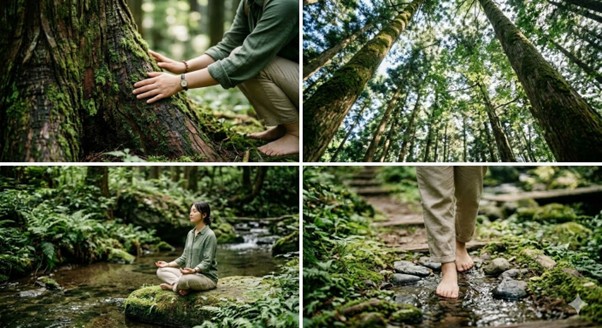
I first heard about the concept of “forest bathing” when a photograph caught my attention. It was a picture of a child hugging a tree with their eyes closed. You could see the lightness of a calm and relaxed mind reflected on their face. A photograph whispering peace and serenity. Known in Japanese as Shinrin-yoku, it is officially recognized and recommended by doctors as a health activity. Moreover, it is accessible and relatively low-cost. It is described through expressions such as breathing in the forest atmosphere or simply breathing within the forest. Walking among trees, hearing your own footsteps, sitting and observing the trees, touching leaves and noticing their details, wondering which birds the sounds belong to, breathing in the smell of the soil... You can include whichever of these experiences you like in this practice. What matters is being aware of where you are and giving your full attention to it.
Forest bathing first began to be used in Japan as a response to increasing stress caused by industrialization and rapid technological development. The rush to be fast, ringing alarms, endless notifications... A “developed” world determined to consume our energy and attention. Richard Louv described the effect of this world on people as “Nature Deficit Disorder.” Spending less and less time in nature, becoming disconnected from it. Shinrin-yoku may be exactly the right remedy at this point. If you are interested, the name of Louv’s book is Last Child in the Woods; I’ve already added it to my reading list.
Most of us already know that walking in a forest and breathing fresh air can make us feel better. Forest bathing is simply the scientifically defined and researched version of this knowledge. Turning an activity we instinctively feel is good for us into a recognized concept—and having it supported by research—will hopefully help us make it a habit. According to research findings, forests can almost be described as a primitive pharmacy.
Forest bathing has been shown to be deeply relaxing for the mind and effective in reducing stress levels. It has also been observed to strengthen the immune system and improve physical resilience. Studies further suggest that it can lower blood pressure and reduce symptoms of depression. One of the findings that feels most important to me is its effect on improving sleep quality. You may remember sleeping comfortably after returning from a lovely picnic. We usually attribute this to tiredness, but it turns out there is actually a scientific explanation behind the effect forests and greenery leave on us. During a training session I attended, we were asked to imagine a place where we felt peaceful and safe. While some participants imagined the seaside, many pictured a place among trees near water. My own image included warm sunlight and plenty of greenery.
Forest bathing may sound overly technical or carefully planned to you. But you do not need a huge forest, a mountain hike, or a multi-day camping trip to benefit from it. The nearest park or patch of greenery can become your own little forest. Just sit down and listen around you; perhaps you will hear birds, or maybe the sound of crickets. Focus on your breathing and the wind touching your face. Touch the soft, damp grass and the rough bark of trees. Minutes spent away from technology, crowds, and the noise of the city may answer needs you did not even realize you had. You may gently set down mental burdens and anxious thoughts, and return home with a rested mind—or at least with the feeling that you managed to pause for a while.
Vildan Demiralay
Yücel Cultural Foundation
Volunteer Writer