In 21st-century youth studies literature, one of the most frequently used concepts is the label “digital native.” It is assumed that young people are born into technology and navigate this world with a natural ease. Yet this assumption carries the risk of making deep inequality invisible. In the context of youth empowerment, the real issue we need to talk about today is not only access to technology, but the way the “digital divide” has changed in nature.
The digital divide has traditionally been defined as a binary separation between those who have access to the internet and computers and those who do not. In rural areas or among socioeconomically disadvantaged groups, this problem still persists. When a young person’s right to access information is limited by the infrastructure of the place they live, it is one of the strongest blows to equal opportunity.
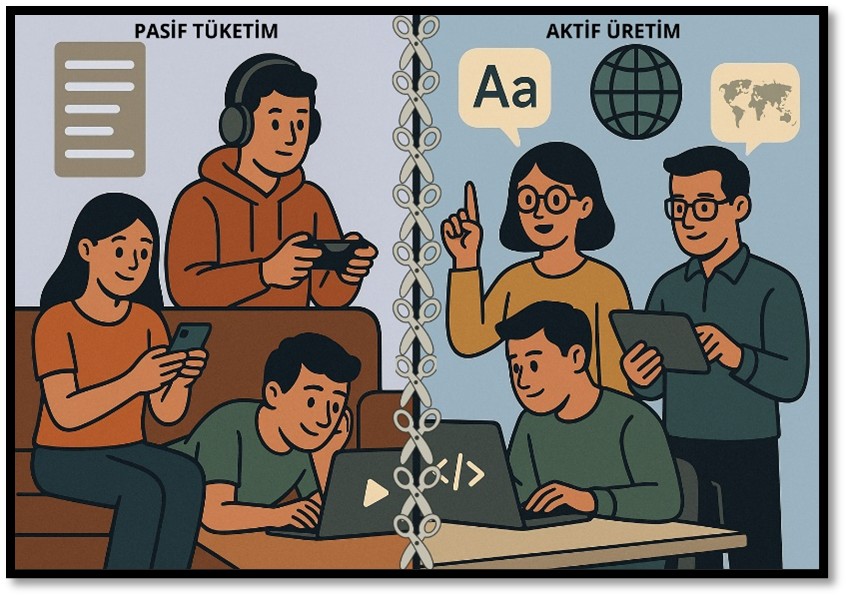
The main barrier that prevents young people from becoming empowered is the gap in use and skills. Having a smartphone in a young person’s hand today does not mean they are digitally empowered. The real question is this: do young people use this technology for consumption, or for production and growth?
On one side, there is a group that uses digital tools mainly to scroll through social media feeds, play games, and remain passive viewers. On the other side, there is a minority that uses the same tools to learn new languages, write code, join global networks, and make their voice heard. This is exactly where the gap widens. And it is this minority that shapes the space where young people become empowered.
When young people with strong digital literacy gain skills such as critical thinking, information verification, and data literacy, they can become strong individuals. Ultimately, in order to close the digital divide among young people, those in disadvantaged parts of society must also be able to make their voices heard and exist in the modern world as active citizens.
The young people who build the future are not those who consume technology, but those who, together with technology, recreate themselves and society as strong young people.
References
Hargittai, Eszter. “Second-Level Digital Divide: Differences in People’s Online Skills”. First Monday, 7(4), 2002.
Van Dijk, Jan. The Deepening Divide: Inequality in the Information Society. SAGE Publications, 2005.
Merve Tosun
Yücel Kültür Vakfı
Volunteer Writer