Making the Invisible Visible: Volunteering, Civil Society, and Alternative Media
Volunteering and civil society refer to a collective space where individuals come together around shared concerns and seek to create social change without expecting anything in return. However, the extent to which these efforts are recognized is closely linked to which issues are made visible in the media. A glance at the daily news flow shows that mainstream media often focuses on rapidly consumed and short-lived agendas. Yet social problems are not issues that emerge and disappear within a single day. This raises an important question: Why are some topics constantly discussed while others are barely heard?
Antonio Gramsci’s concept of hegemony offers an important framework at this point. According to Gramsci, media is not merely a neutral tool that transmits information; it is also a space where decisions are made about which issues are considered important and which are deemed insignificant. In other words, media largely determines what society talks about and what it chooses to ignore. For this reason, civil society needs spaces where it can make its own voice heard and set its own agenda. Alternative media emerges precisely from this need. Platforms operating outside mainstream media—more independent, participatory, and often driven by volunteer labor—such as blogs, podcasts, independent news sites, social media communities, and volunteer-based digital platforms, form these spaces. They are arenas where civil society actors can say, “we are here.”
The greatest strength of alternative media lies in its ability to make the invisible visible. From environmental struggles to gender equality, from children’s rights to animal rights, from the challenges faced by migrants to human rights violations, it offers space to produce discourse across many fields. Moreover, these platforms do not merely report on such issues; they also share solidarity practices rooted in volunteerism, experiences from the field, and collective efforts to seek solutions, thereby creating a shared narrative space.
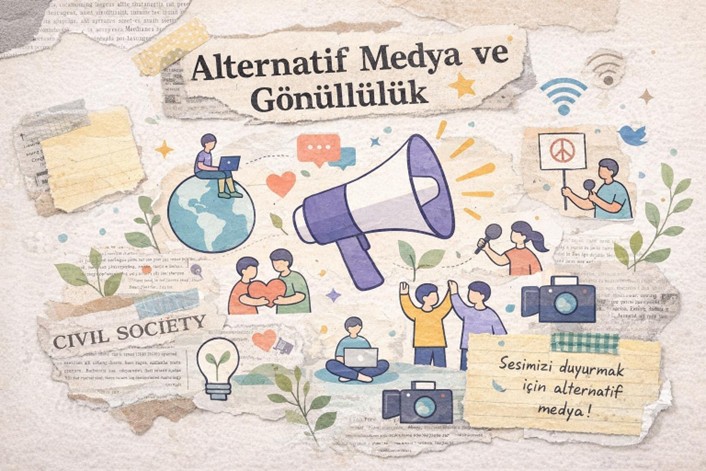
Ultimately, alternative media is not only a communication tool for civil society but also a space of solidarity. Content produced through volunteer effort does not merely inform the reader; it invites them to become part of the process. Viewed through Gramsci’s theory of hegemony, alternative media holds the potential to create a more pluralistic and participatory public sphere in response to agendas determined from a single center. Most importantly, it reminds us that change does not always begin with major headlines, but often with small yet genuine stories.
İrem İlayda Arslanoğlu
Yücel Cultural Foundation
Volunteer Writer