Have you ever wondered what a village or settlement that appears as just a dot on a map was like in the past? Population records and land registry documents only show us numbers. They cannot reveal the hardships people endured in that village, the friendships they formed or the customs that have been forgotten. This is where oral history comes into the picture. Oral history is not simply a method of recording the past; it is an effort to discover and protect a village's fading memory against the passage of time. Now, through this article, we will embark on a journey towards our own roots.
Getting Started with Oral History: A Step-by-Step Roadmap
For researchers who want to uncover the hidden memory of a settlement, the first step is preliminary research carried out at a computer.
Preliminary Research and Archival Review
Before going into the field, articles and documents written about the village or region to be studied should be examined. This review provides a foundation for preparing the questions to be asked during interviews.
Spatial Analysis and Mapping
The physical structure of the village should be identified. The locations of old houses, the school, old roads and fountains should be documented. Knowing what the place looked like in the past and what it looks like today makes it easier to ask questions during interviews.
Identifying Interviewees
Elderly residents who can be described as the village's "living libraries," former village headmen and people who continue traditional crafts can be selected as interviewees. To avoid relying on a single narrative, forming a diverse group of interviewees from different families increases the reliability of the research.
Fieldwork: Communicating with Living Libraries
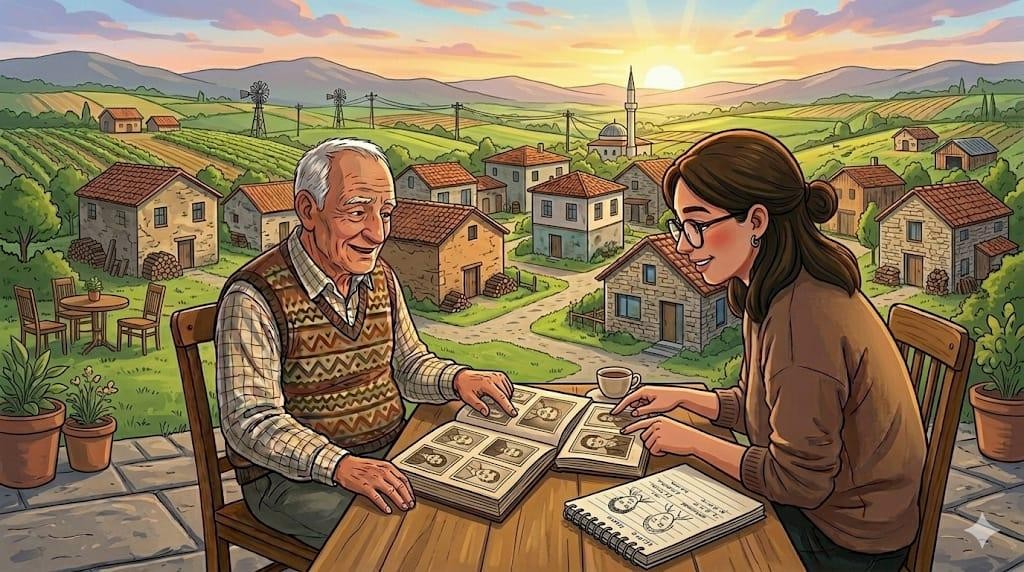
The greatest advantage for researchers studying their own village, town or settlement is that they will be interviewing their own relatives or neighbours. Working with familiar faces makes it easier to overcome the barrier of distrust. However, this also brings a significant disadvantage. Interviewees may skip over certain subjects without going into detail, saying, "You already know that." In such situations, researchers should kindly ask them to tell the story again and listen as though they were hearing it for the first time.
Rather than asking elderly residents general questions such as "What is the history of the village?", it is better to choose questions that help them recall memories from everyday life. For example, researchers might ask, "What customs were followed at weddings in the past?" or "What did you do when you gathered together before electricity was available?"
One of the most important aspects of oral history research is making audio and video recordings. Using a recording device removes the need to take notes during an interview and allows the conversation to flow naturally. The first thing to pay attention to here is obtaining the interviewee's permission. Clear and friendly expressions should be chosen so as not to make elderly people uncomfortable. For example, instead of directly saying, "I'm going to record this," an approach such as "May I make an audio recording so that I don't forget what you've told me?" will help them feel more comfortable.
Final Stage: Archiving and Leaving a Legacy for the Future
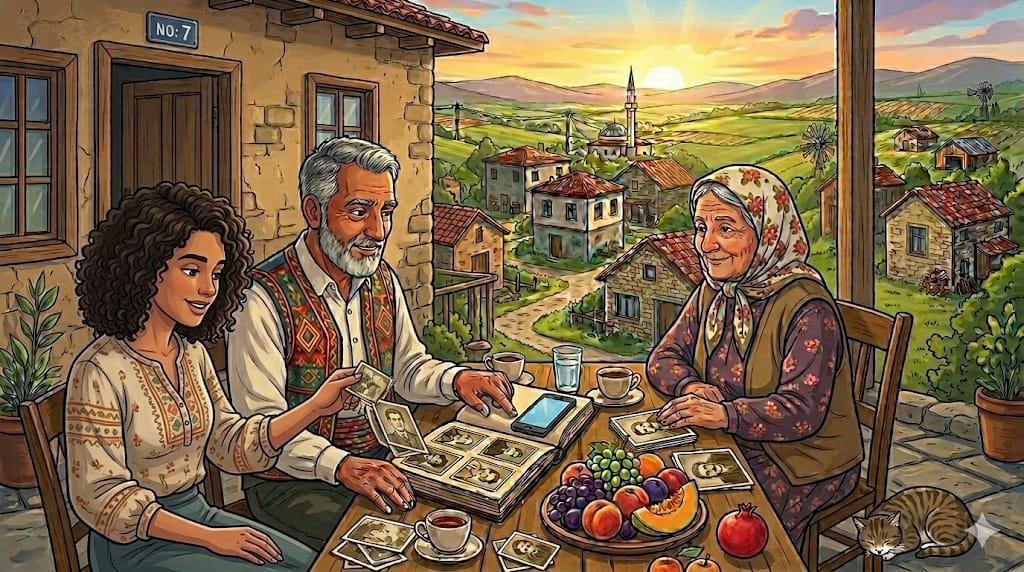
After the fieldwork, the most patience-demanding yet lasting part of oral history research begins. Audio recordings are transcribed word for word, preserving the interviewee's language, local dialect and manner of expression. These transcriptions should be brought together with the photographs and documents collected during the research and, if carried out, the spatial analyses.
Oral history becomes a social benefit as long as it is shared. This valuable work can be collected in a digital blog or turned into a physical archive kept at the village headman's office so that it can reach future generations or young people who have moved away. On the other hand, you are not obliged to share this work with anyone. You may also keep it as a private treasure chest of memories belonging entirely to you and your family.
Exploring our roots and the places we come from is not merely a nostalgic interest; it is a cultural heritage that makes us who we are.
Aslı Şahin
Yücel Cultural Foundation
Volunteer Writer